
Is Your Website Mobile Friendly and Responsive?
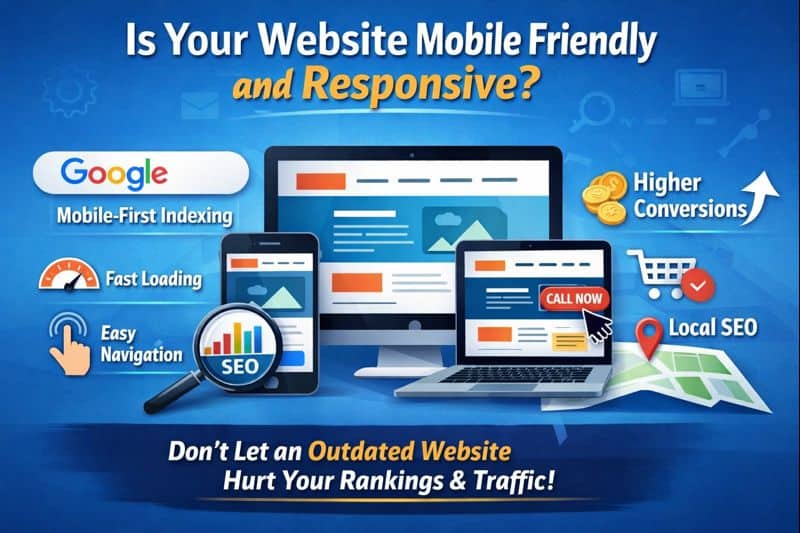
In today’s digital world, having a mobile friendly website is no longer optional for businesses that want to stay competitive online. The majority of website traffic now comes from smartphones and tablets, and users expect fast, seamless experiences on every device. If your website is not optimized for mobile devices, visitors are far more likely to leave before engaging with your content or contacting your business. This leads to lost traffic, reduced conversions, and declining trust in your brand.
Beyond user experience, mobile friendliness plays a critical role in search engine rankings. Google has officially shifted to mobile first indexing, meaning the mobile version of your website is now the primary version used for ranking and indexing. If your site does not perform well on smartphones and tablets, Google may view your website as lower quality, regardless of how strong the desktop version looks. As a result, poor mobile performance directly impacts your visibility in search results and your ability to compete online.
Mobile optimization is no longer just a technical consideration but a core part of modern SEO strategy. Search engines prioritize websites that provide consistent, high quality experiences across all devices. A mobile friendly responsive website helps ensure your content is accessible, readable, and easy to navigate for every visitor. Without proper mobile optimization, even well written content and strong SEO strategies can fail to deliver results.
What Does Mobile Friendly and Responsive Really Mean?
A mobile friendly website is designed to display and function properly on smaller screens such as smartphones and tablets without sacrificing usability or readability. This means visitors can easily view content, click links, and navigate pages without needing to zoom or scroll horizontally. Mobile friendliness focuses on making sure the website works well for users who rely on touch input rather than a mouse. When a site is mobile friendly, it feels natural and intuitive for users on any device.
A responsive website goes a step further by automatically adjusting its layout, text size, images, and navigation based on the screen size and device being used. Instead of having separate versions of a website, responsive design uses flexible layouts that adapt in real time. This ensures that the same content delivers a high quality experience whether it is viewed on a phone, tablet, laptop, or desktop computer. Responsive design also helps prevent content from being hidden or distorted on different devices.
Responsive web design ensures your website maintains a professional appearance and functionality across all screen sizes. Pages load quickly on mobile devices, which is essential for both user experience and search engine rankings. Text remains easy to read without zooming, reducing frustration and keeping visitors engaged longer. Navigation is designed specifically for touch users, making it simple to access important pages and take action.
Google strongly recommends responsive design because it creates a consistent experience across devices while making it easier for search engines to crawl and index your website. With responsive design, all SEO signals such as links, content relevance, and engagement metrics are consolidated into a single website structure. This improves indexing efficiency and reduces the risk of ranking issues caused by duplicate or incomplete mobile content. As a result, responsive web design supports both usability and long term SEO performance.
Why Google Mobile First Indexing Matters for SEO
Google now evaluates your website primarily based on its mobile version, not the desktop version. This change reflects real user behavior, as most searches now happen on smartphones and tablets. When Google crawls and indexes your site, it looks first at how your mobile content performs in terms of usability, speed, and accessibility. If the mobile experience is weak, your rankings will suffer even if your desktop site appears polished.
With mobile first indexing, several mobile specific factors directly influence your SEO performance, including:
-
Mobile usability, which affects how easily visitors can navigate and interact with your site
-
Page load speed on mobile devices, as slow loading pages lead to higher bounce rates
-
Mobile layout quality, since cluttered or broken layouts frustrate users
-
Content visibility on mobile, because hidden or missing content may not be indexed
Each of these factors sends signals to Google about the overall quality of your website. When mobile users struggle to read content, click buttons, or load pages quickly, they are more likely to leave without engaging. These negative engagement signals tell search engines that your site may not be providing a good user experience.
One of the biggest SEO risks comes from having different content on mobile and desktop versions of your site. If important text, internal links, images, or calls to action are missing from the mobile version, Google may not index them at all. This can significantly reduce your visibility for important keywords and weaken your overall SEO authority. For best results, your mobile site should contain the same high quality content as your desktop site.
If your desktop site looks great but your mobile site is outdated, slow, or broken, Google will rank your website based on the weaker version. This often leads to ranking drops that seem sudden or unexplained. Ensuring your mobile experience is fast, responsive, and fully optimized is essential for protecting your rankings and maintaining long term SEO success.
This is why mobile optimization is a critical part of our Local SEO services and ongoing SEO campaigns.
How a Mobile Friendly Website Impacts User Experience
User experience plays a major role in how Google evaluates your website and determines how well it ranks in search results. Mobile users expect websites to load quickly, display correctly, and be easy to use on smaller screens. When a site delivers a smooth mobile experience, visitors are more likely to stay longer, view multiple pages, and take action. This positive behavior sends strong quality signals to search engines.
When a website is not properly optimized for mobile devices, users often run into frustrating usability issues that make the site difficult to navigate. These problems commonly include:
-
Text that is too small to read, forcing users to zoom and adjust constantly
-
Buttons and links that are hard to tap, especially on touch screens
-
Horizontal scrolling, which disrupts readability and layout flow
-
Slow page load speeds, particularly on mobile networks
These issues create friction and quickly drive visitors away from your website. Mobile users are often searching with intent and have little patience for poorly optimized sites. When users leave quickly without engaging, bounce rates increase and time on site decreases. Google interprets these signals as indicators that your website is not meeting user expectations.
A properly optimized mobile friendly website eliminates these barriers and delivers a smoother experience across all devices. Clear navigation, readable content, and fast performance make it easier for users to find information and contact your business. This is why mobile optimization is a core part of professional web design services and effective SEO strategies. Improving mobile user experience not only supports higher rankings but also helps convert visitors into leads and customers.
Mobile Optimization and Conversion Rates
Mobile traffic now accounts for the majority of website visits across most industries, making mobile optimization essential for lead generation and sales. Many users discover businesses for the first time on their smartphones and are often ready to take action immediately. If your website is not optimized for mobile conversions, you are likely losing potential customers even when traffic levels appear strong. A poor mobile experience can break the connection between interest and action.
A mobile friendly responsive website removes friction and makes it easier for visitors to convert. When pages load quickly and layouts are easy to navigate, users are more likely to complete important actions such as contacting your business or making a purchase. Mobile optimization directly improves key conversion metrics, including:
-
Form completion rates, by simplifying input fields and layouts
-
Phone call conversions, through click to call functionality
-
Online purchases, by reducing checkout friction on mobile devices
-
Local service inquiries, by making contact information easy to find
For local businesses, mobile optimization plays an even more critical role in driving real world results. Users searching on mobile devices are often looking for immediate solutions and nearby services. This is why mobile performance is a core component of effective Local SEO strategies and high converting web design services. Whether you are a local business in Spokane or a service provider targeting a broader audience, improving mobile optimization directly impacts your bottom line by turning visitors into leads and customers.
Responsive Web Design vs Separate Mobile Websites
Some older websites rely on separate mobile versions, often referred to as m-dot sites, to serve users on smartphones and tablets. While this approach was common in the early days of mobile browsing, it introduces several challenges for modern SEO and usability. Managing multiple versions of the same website often leads to inconsistent content, broken links, and duplicated pages. These issues can confuse both users and search engines.
Responsive web design is now the preferred approach because it allows a single website to automatically adapt to all screen sizes and devices. Instead of splitting content across multiple URLs, responsive design ensures that every visitor sees the same high quality content regardless of how they access the site. This creates a more consistent user experience and reduces the risk of technical SEO issues. It also aligns with Google’s recommended best practices for mobile optimization.
Responsive web design is favored because it offers several important advantages, including:
-
One website that serves all devices, eliminating the need for separate mobile and desktop versions
-
Consolidated SEO signals, such as backlinks, engagement metrics, and content relevance
-
Easier and more cost effective maintenance, since updates only need to be made once
-
Explicit support from Google, which recommends responsive design for mobile first indexing
If your website is still using outdated mobile solutions, it may be time for a redesign. Older mobile setups often struggle with performance, usability, and SEO compliance. A modern responsive redesign not only improves mobile experience but also strengthens your overall SEO foundation. This is why responsive design is a key part of professional web design services and long term SEO strategy planning.
Signs Your Website Is Not Mobile Friendly
Many business owners assume their website is mobile friendly simply because it loads on a smartphone. However, true mobile optimization involves usability, performance, and design working together to create a smooth experience. If your website has underlying mobile issues, it can negatively impact both user engagement and search rankings. Identifying these problems early helps prevent lost traffic and conversions.
There are several common warning signs that indicate your website is not properly optimized for mobile devices, including:
-
Pages that fail Google’s mobile friendly test, which can limit visibility in search results
-
Slow mobile load times, often caused by unoptimized images or outdated code
-
Navigation menus that are hard to use, especially on touch screens
-
Text and images that do not scale properly, making content difficult to read
These issues create frustration for mobile users and often cause them to leave your site without taking action. High bounce rates and low engagement are clear indicators that visitors are struggling to use your website on mobile devices. Search engines use these signals to evaluate site quality and relevance. Over time, unresolved mobile issues can lead to ranking declines.
Many of these problems are uncovered during a professional SEO and website audit, where mobile performance, usability, and technical factors are evaluated together. An audit helps identify hidden issues that may not be obvious at first glance. Addressing these problems improves both user experience and search engine performance. Regular audits are an essential part of maintaining a healthy, mobile optimized website.
These issues are often identified during a professional SEO and website audit.
Mobile optimization is especially important for local SEO because most local searches happen on mobile devices. Users searching for nearby services are often on the go and ready to take action immediately. Whether they are looking for directions, contact information, or services near them, mobile usability directly affects their decision making process. A poor mobile experience can cause potential customers to choose a competitor instead.
A mobile friendly website supports stronger local SEO performance by aligning with how search engines evaluate local intent. Google prioritizes businesses that provide fast, accessible, and easy to use mobile experiences. When your website is optimized for mobile, it works seamlessly with your Google Business Profile and local search listings. This helps search engines connect your business with users searching in your service area.
A properly optimized mobile friendly website helps your business:
-
Rank higher in local search results, by improving usability and engagement signals
-
Convert mobile searchers into customers, through click to call buttons and easy navigation
-
Improve Google Maps visibility, by supporting strong local relevance signals
Mobile optimization is a key component of effective Local SEO services, especially for businesses targeting specific geographic areas. For Spokane based businesses, mobile performance plays a major role in appearing in local map results and service related searches. By combining mobile friendly web design with a strong local SEO strategy, businesses can attract more high intent customers and drive consistent local leads.
This is a key component of our Local SEO strategy for Spokane businesses.
How We Help Businesses Build Mobile Friendly Websites
At Worry Free Web Design and SEO, we design and optimize websites with mobile performance in mind from the very beginning. Mobile usability is not treated as an afterthought but as a core part of our web design and SEO process. By focusing on mobile first principles, we ensure that your website performs well for users and search engines alike. This approach helps protect your rankings while improving user engagement and conversions.
Our mobile friendly website services are designed to support both usability and long term SEO performance. We build websites that adapt seamlessly to all screen sizes while maintaining fast load times and clean layouts. Our services include:
-
Responsive website design, ensuring your site looks and functions correctly on all devices
-
Mobile speed optimization, reducing load times and improving performance on mobile networks
-
User experience improvements, focused on navigation, readability, and touch interaction
-
SEO friendly site structure, supporting better crawling, indexing, and ranking
Every website we build is designed to meet modern Google standards for mobile first indexing and usability. We combine technical optimization with strategic design to create websites that are easy to use and easy to find in search results. This is why mobile optimization is a key part of our professional web design services and SEO strategies. Our goal is to provide a seamless experience across all devices while helping your business attract more traffic, leads, and customers.
Get a Mobile Friendly Website That Ranks and Converts
If your website is not mobile friendly, you are already falling behind your competitors in search rankings and customer acquisition. Mobile optimization is no longer a future trend or optional upgrade but a core ranking requirement in today’s search landscape. Google expects websites to perform well on mobile devices, and users expect fast, easy to use experiences. Businesses that fail to meet these expectations risk losing traffic, leads, and revenue.
Whether you need a full website redesign or ongoing mobile optimization, our team has the experience to help. We take a strategic approach that combines responsive design, mobile speed optimization, and SEO best practices. This ensures your website not only looks great but also performs well in search results. Our solutions are built to support long term growth, not short term fixes.
At Worry Free Web Design and SEO, we focus on building websites that rank and convert across all devices. Mobile optimization is a key part of our web design services and ongoing SEO strategies, helping businesses stay competitive in an increasingly mobile driven market. We design websites that attract visitors, keep them engaged, and guide them toward taking action.
Contact us today to get a mobile friendly responsive website that improves rankings, user experience, and conversions.